¶ Safety Moments
Specific safety guidelines and reminders for the Rovis Lab.
¶ Chemical Cabinets
¶ Guidelines
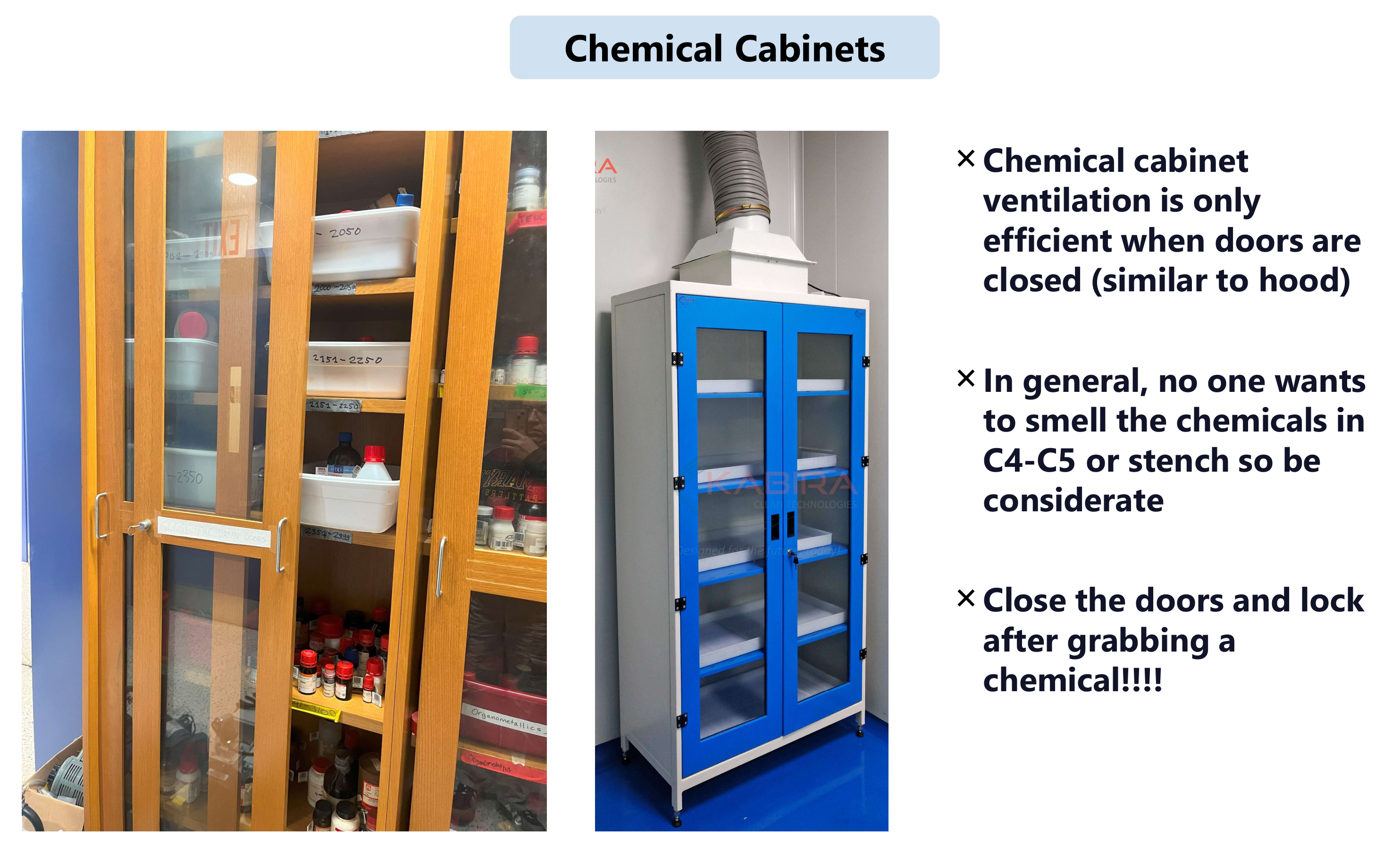
- Keep Doors Closed: Chemical cabinet ventilation is only efficient when doors are closed (similar to a fume hood).
- Be Considerate: In general, no one wants to smell the chemicals in C4-C5 or stench, so be considerate.
- Lock Up: Close the doors and lock after grabbing a chemical!
¶ Column Safety Considerations
¶ Safety Concerns
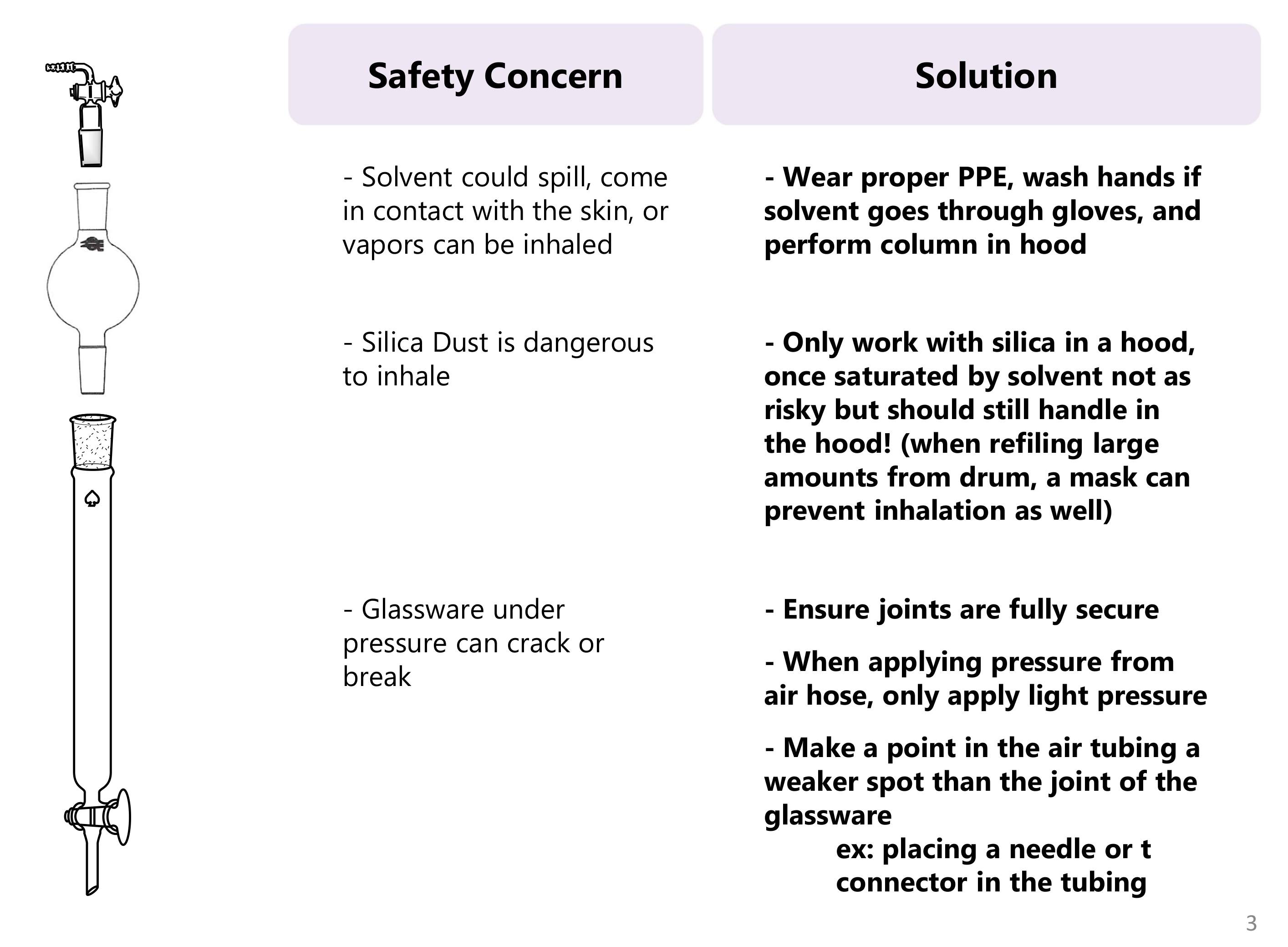
- Spills/Inhalation: Solvent could spill, come in contact with the skin, or vapors can be inhaled.
- Silica Dust: Dangerous to inhale.
- Glassware under pressure: Can crack or break.
¶ Solutions
- PPE: Wear proper PPE, wash hands if solvent goes through gloves, and perform column in hood.
- Silica Handling: Only work with silica in a hood. Once saturated by solvent it is not as risky but should still be handled in the hood! (When refilling large amounts from a drum, a mask can prevent inhalation as well).
- Glassware Security:
- Ensure joints are fully secure.
- When applying pressure from air hose, only apply light pressure.
- Make a point in the air tubing a weaker spot than the joint of the glassware (e.g., placing a needle or t-connector in the tubing).
¶ Overnight Reactions
¶ Reflux
Common Mistakes:
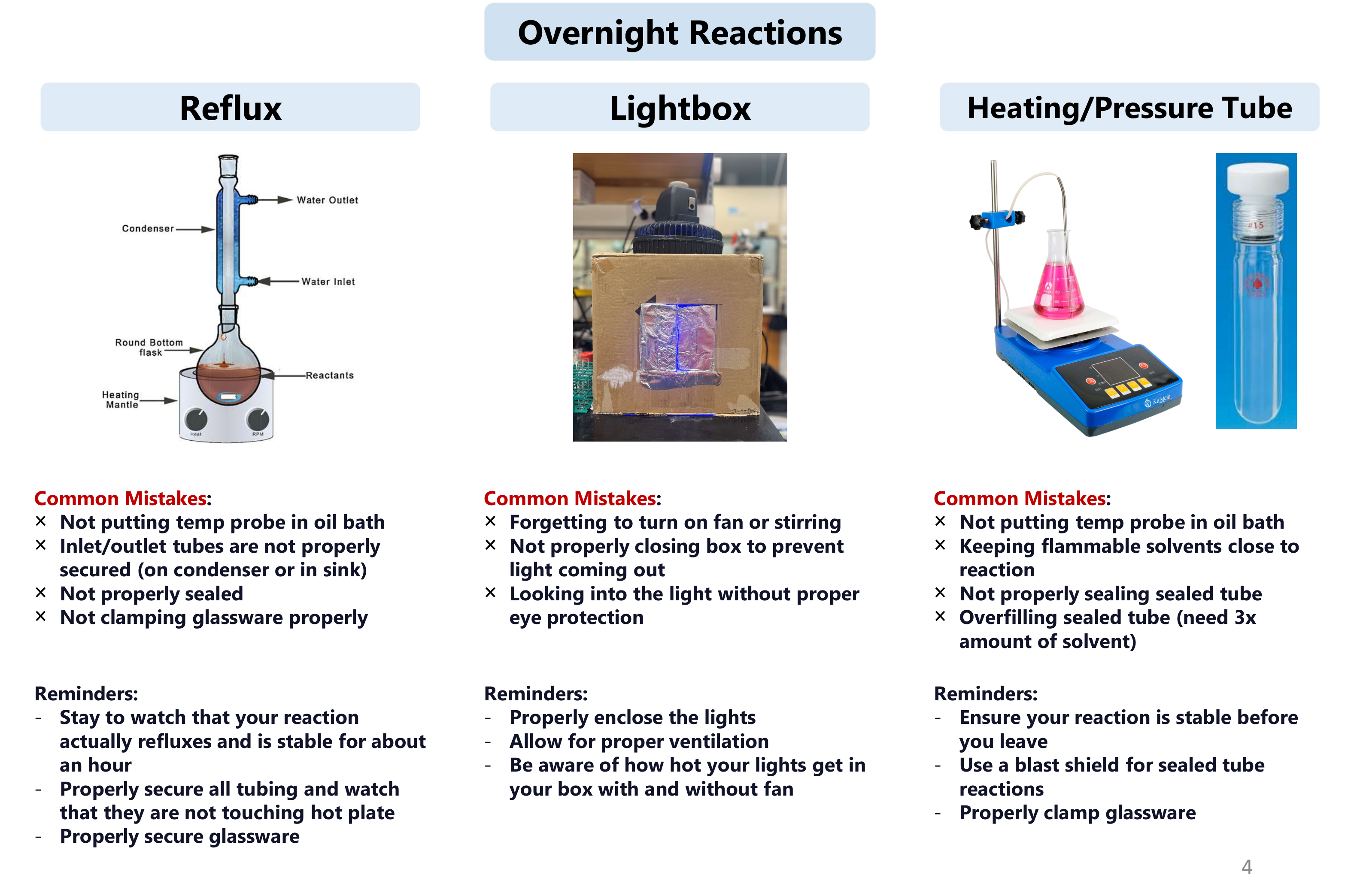
- Not putting temp probe in oil bath.
- Inlet/outlet tubes are not properly secured (on condenser or in sink).
- Not properly sealed.
- Not clamping glassware properly.
¶ Lightbox
Common Mistakes:
- Forgetting to turn on fan or stirring.
- Not properly closing box to prevent light coming out.
- Looking into the light without proper eye protection.
¶ Heating/Pressure Tube
Common Mistakes:
- Not putting temp probe in oil bath.
- Keeping flammable solvents close to reaction.
- Not properly sealing sealed tube.
- Overfilling sealed tube (need 3x amount of solvent).
¶ Reminders
- Stay to watch: Ensure your reaction actually refluxes and is stable for about an hour before leaving.
- Secure tubing: Watch that they are not touching the hot plate.
- Ventilation: Allow proper ventilation for lightboxes.
- Heat: Be aware of how hot your lights get in your box with and without a fan.
- Blast Shield: Use a blast shield for sealed tube reactions.
¶ POCl3 Safety
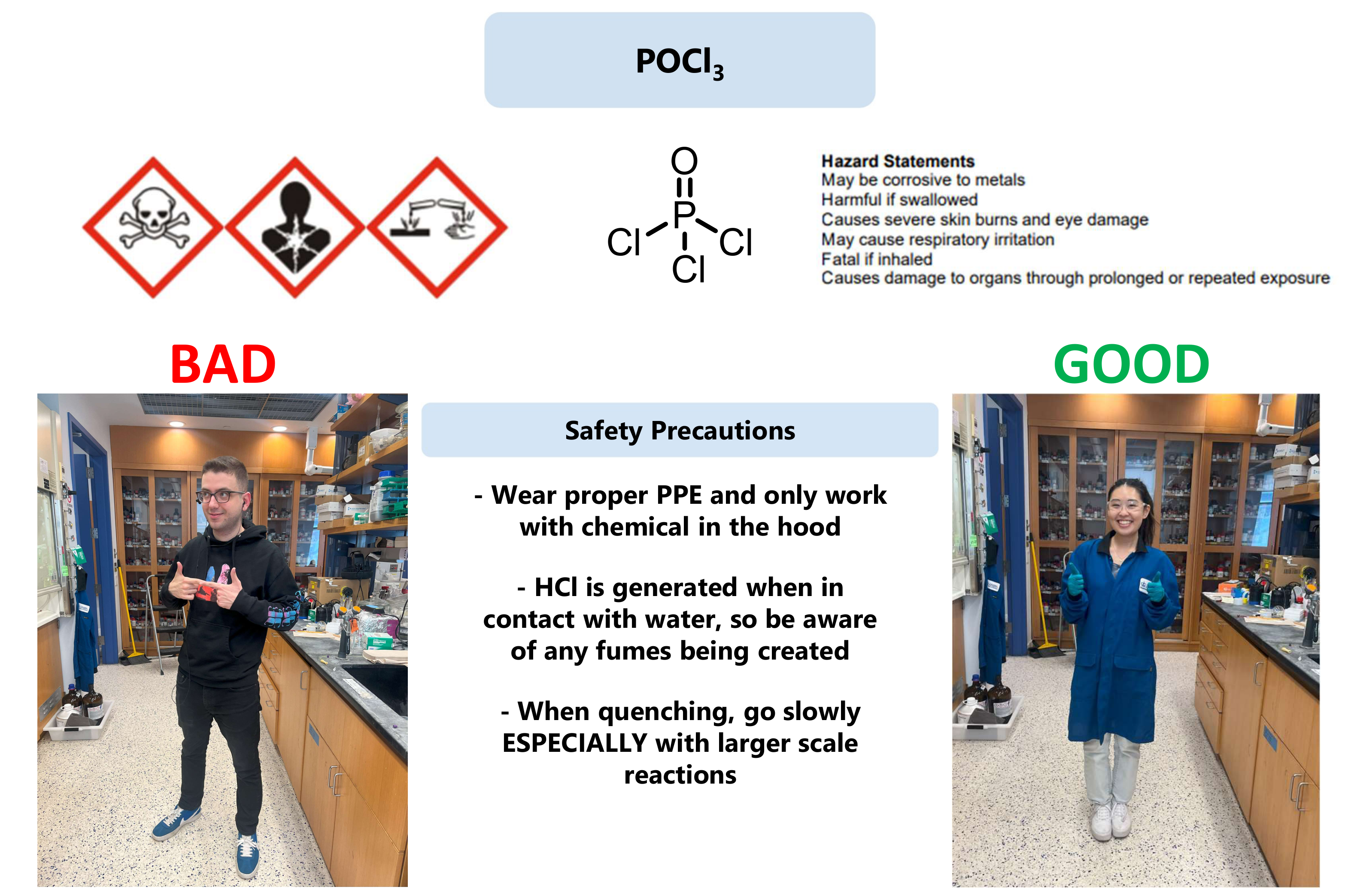
POCl3 (Phosphorus Oxychloride)
- Hazards:
- May be corrosive to metals.
- Harmful if swallowed.
- Causes severe skin burns and eye damage.
- May cause respiratory irritation.
- Fatal if inhaled.
- Causes damage to organs through prolonged or repeated exposure.
¶ Safety Precautions
- PPE: Wear proper PPE and only work with chemical in the hood.
- HCl Generation: HCl is generated when in contact with water, so be aware of any fumes being created.
- Quenching: When quenching, go slowly ESPECIALLY with larger scale reactions.
¶ Proper Pipette Maintenance
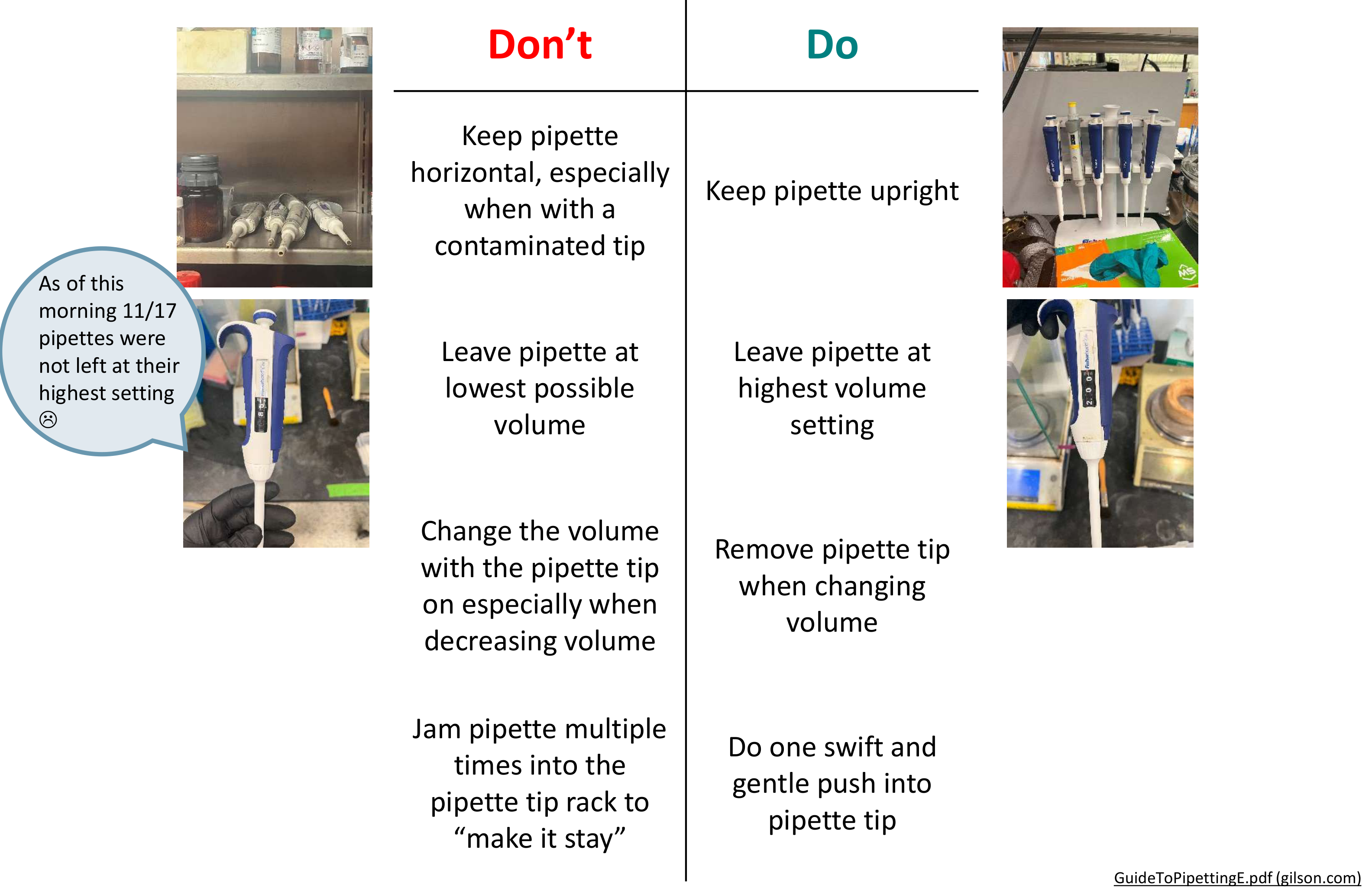
| Don't | Do |
|---|---|
| Keep pipette horizontal, especially when with a contaminated tip | Keep pipette upright |
| Leave pipette at lowest possible volume | Leave pipette at highest volume setting |
| Change the volume with the pipette tip on, especially when decreasing volume | Remove pipette tip when changing volume |
| Jam pipette multiple times into the pipette tip rack to "make it stay" | Do one swift and gentle push into pipette tip |
Note: As of 11/17 pipettes were not left at their highest setting. Please maintain them properly!
¶ Fire Safety & Locations
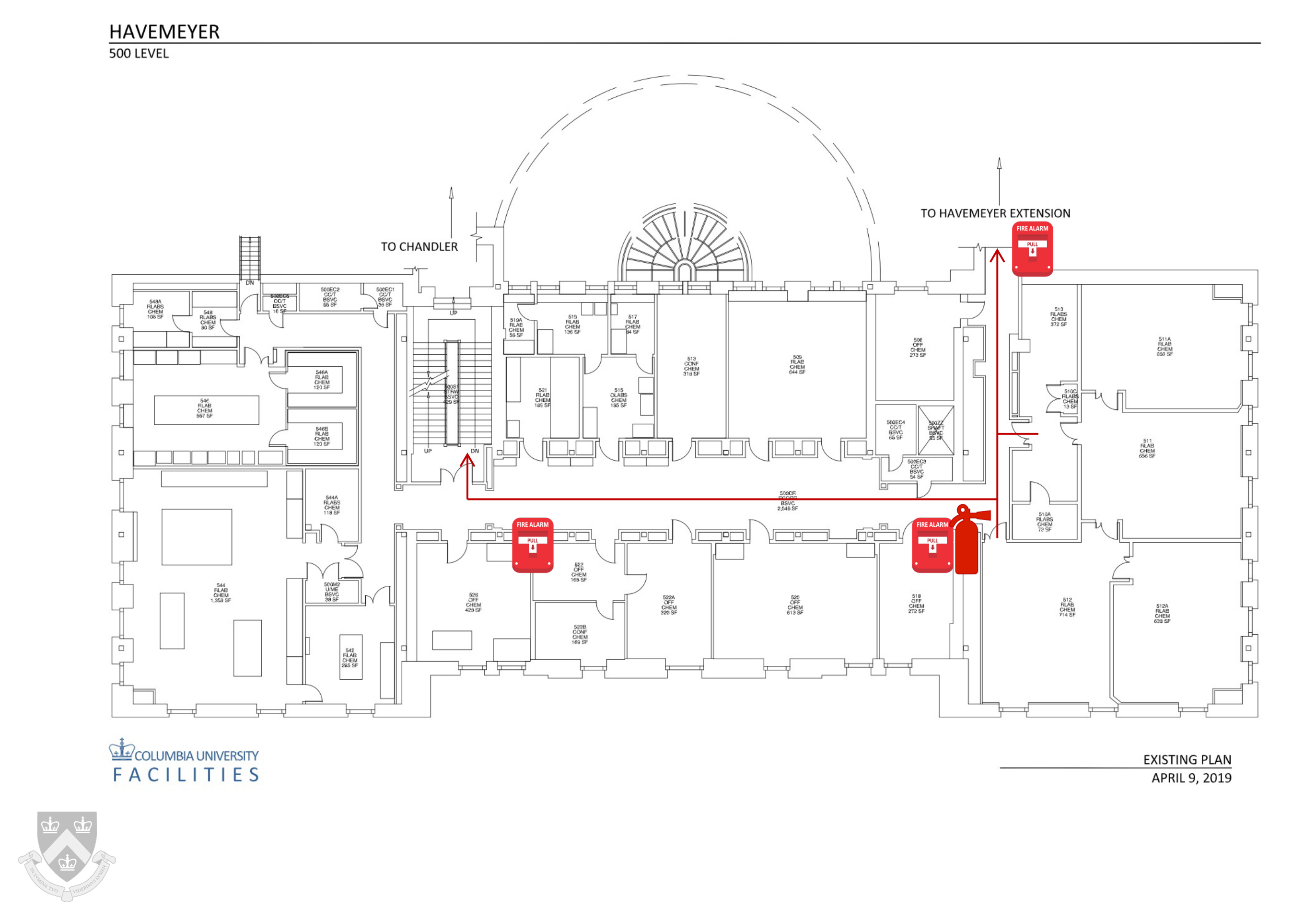
¶ Havemeyer 500 Level Plan
¶ Emergency Response Procedures
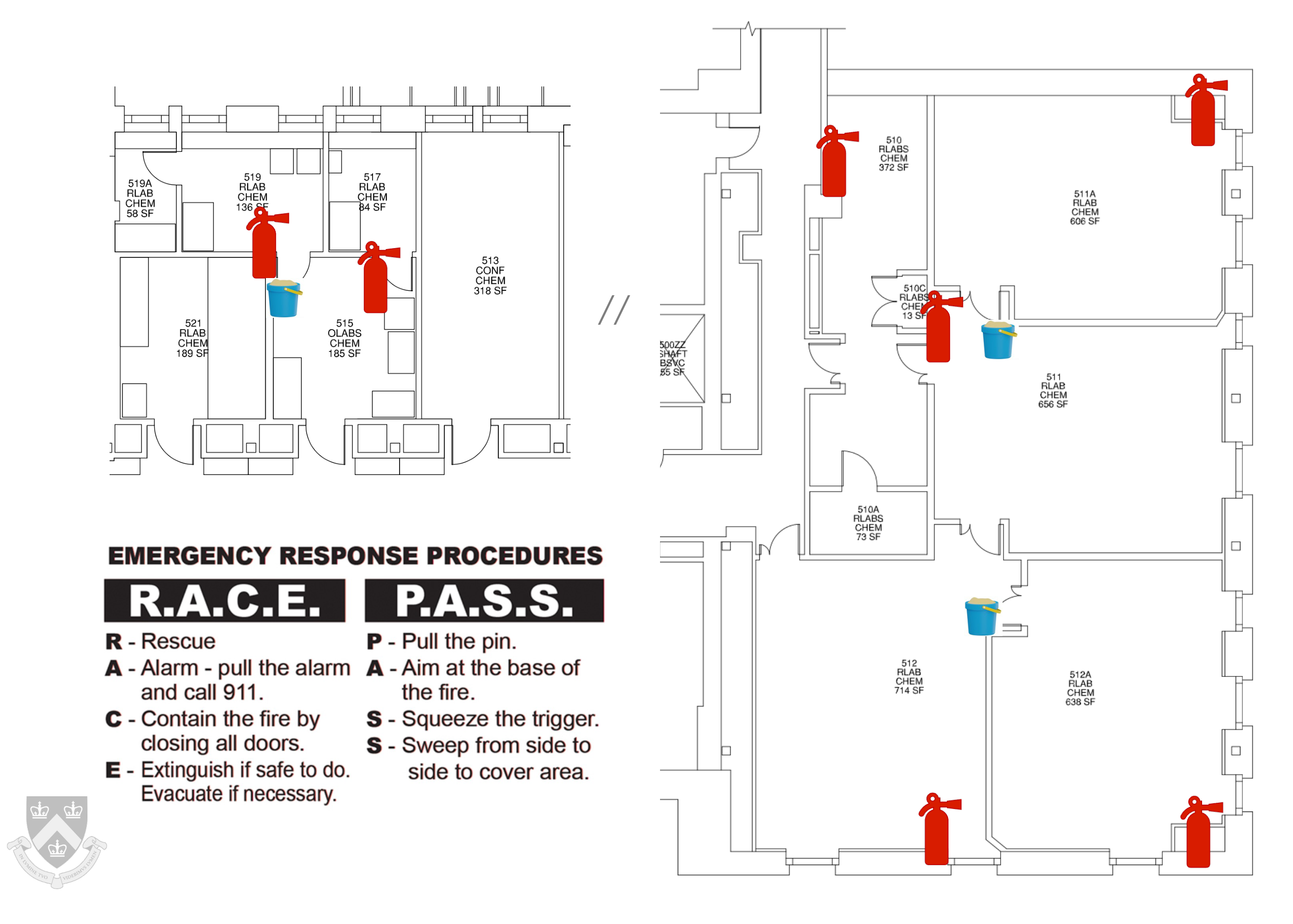
¶ R.A.C.E.
- R - Rescue: Rescue anyone in immediate danger.
- A - Alarm: Pull the alarm and call 911.
- C - Contain: Contain the fire by closing all doors.
- E - Extinguish: Extinguish if safe to do so. Evacuate if necessary.
¶ P.A.S.S. (Fire Extinguisher Use)
- P - Pull: Pull the pin.
- A - Aim: Aim at the base of the fire.
- S - Squeeze: Squeeze the trigger.
- S - Sweep: Sweep from side to side to cover area.